Product evaluation
What a nutritionist does, and what to prepare before evaluating a feed additive
The nutritionist’s role at a mill or farm, the data to have ready, how to design a trial and how to work out the economics.
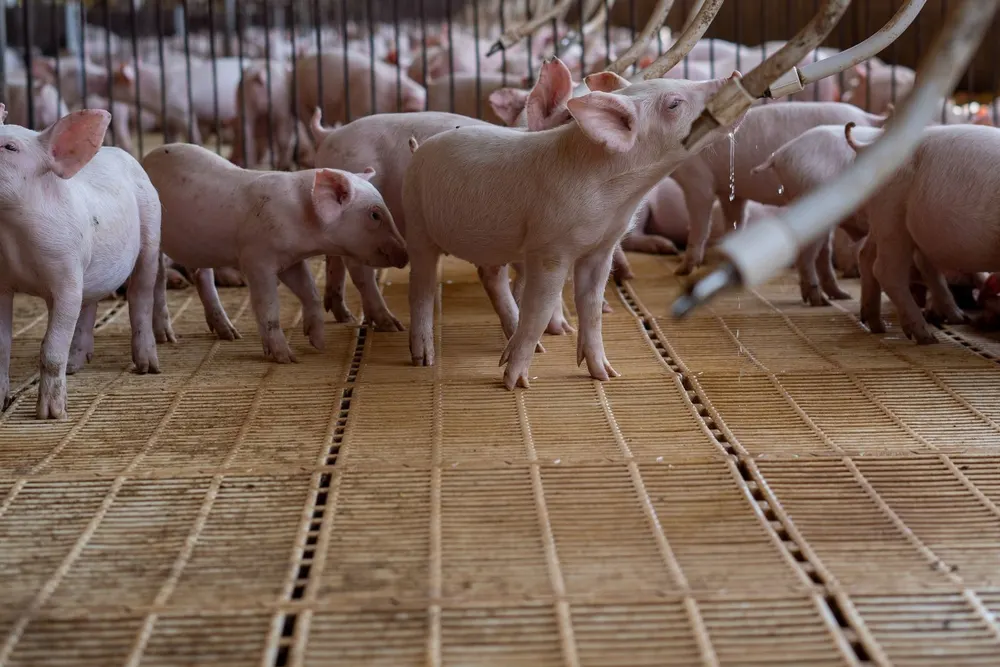
An animal nutritionist builds formulas that meet each stage's requirements at a sensible cost, controls raw-material quality and evaluates new products. When evaluating a feed additive there is one question: does the product lower the cost per kg of output sold, measured on your own farm or line.
- Prepare the data first: the ration, raw-material analyses, the last three months of performance.
- A fair trial changes one thing and runs a control group alongside.
- The decision metric is feed cost per kg of gain, not FCR alone.
- Agree success criteria before you start, not after the results arrive.
What does a nutritionist do at a feed mill?
The job joins biochemistry, statistics and economics. At Vietnamese mills one nutritionist often covers both formulation and quality.
- Formulation
Least-cost formulas on the nutrient matrix of each raw-material lot, updated as prices move.
- Raw-material control
NIR and lab analysis, intake limits, mycotoxins.
- Finished-feed quality
Pellet durability, mixing uniformity, farm complaints.
- New-product evaluation
Reviewing files, designing trials, working out the economics.
- Working with the vet
The health programme, especially since feed lost preventive antibiotics.
What should you prepare before an evaluation?
The more baseline data you have, the shorter the trial and the firmer the conclusion. This is the list we ask for before every evaluation.
| Information | Why it is needed |
|---|---|
| Current ration and additive inclusions | Avoid overlapping with products already used |
| Latest raw-material analyses, including mycotoxins | Shows the real challenge in the ration |
| Pelleting conditions (temperature, time) | Microbes and enzymes must survive the process |
| Genetics, stage, herd or flock size | Match product and inclusion to the animal |
| Last three months: FCR, gain, mortality | The baseline to compare against |
| Vet and vaccination programme | Separate the product effect from vet interventions |
| Goal and budget | Define success before starting |
How do you design a fair trial?
Two groups identical in every way, run at the same time, differing only in the product tested. Comparing against last year or another farm misleads, because weather, genetics and disease change.
- One factor: no change to the base ration, vaccines or housing during the trial.
- Long enough: a full stage (for example weaning to 25 kg, or broilers 1–35 days).
- Large enough: several pens or houses per group, not a single pen.
- Same records: feed intake, start and end weights, mortality, vet interventions.
Need a trial plan?
Send the stage, scale and baseline data. We suggest a trial design and how to read the result.
How do you work out the economics?
Use feed cost per kg of gain: FCR × feed price per kg. It already includes the additive cost.
| Measure | Control | Treated |
|---|---|---|
| FCR | 2.60 | 2.55 |
| Feed price (VND/kg) | 11,000 | 11,150 (incl. VND 150/kg product) |
| Feed cost per kg gain | VND 28,600 | VND 28,433 |
| Difference | −VND 167 per kg gain |
Illustrative figures.
For a batch of 1,000 pigs each gaining about 90 kg, VND 167/kg is roughly VND 15 million per batch in this example, before any value from changes in mortality or uniformity.
Which documents should you ask the supplier for?
A complete file rules out unsuitable products early and shortens the trial.
- Specification: composition, microbial strains and viable counts (CFU), enzyme activity with the assay defined.
- The latest batch certificate of analysis and stability in pelleting and storage.
- Published studies with year, animals and design.
- Inclusion guidance by species and stage.
- Declaration status in Vietnam.
The study files for Biofeed Ras products are in our evidence library.
Our view
- No baseline, no conclusion. Record three months before you trial.
- Compare in parallel, at the same time. Not against last year or another farm.
- Decide on cost per kg of gain, with the product price included.
- Write success criteria down before you start, agreed by nutrition, vet and purchasing.
FAQ
How long should a trial run?
At least one full production stage, for example weaning to about 25 kg in piglets, or a full broiler crop. Shorter trials make it hard to separate the product effect from natural variation.
Is a trial needed if the supplier has studies?
Yes. Studies show the product works under the tested conditions; your trial shows whether it pays under yours.
Is one pen per group enough?
No. A single pen can differ by position, fans or water. Use several pens or houses per group.
Who should take the decision?
The nutritionist, the vet, the farm manager and purchasing. Each sees a different part of the cost.
How many animals does a trial need?
There is no single number. Several pens or houses per group give a more reliable result than one large pen. For an important trial, ask your nutritionist how many replicates are needed before you start.
What should records be kept in?
A simple spreadsheet by pen and by week is enough: feed used, start and end weights, deaths, vet interventions. What matters is recording both groups the same way.
Sources
- Biofeed Ras evidence library: published studies on LIVEBIOS, BioLAC, MINGFIX.
- Decree 13/2020/ND-CP, Article 12 (2026 consolidated text): young-animal criteria.
Technical information, not a substitute for veterinary advice. Biofeed Ras products are feed additives, not veterinary drugs.