Seasonal management
Vietnam's climate and the ration: adjusting for heat, rain, damp and cold
Three times of year change feed intake, raw-material quality and gut health in pigs and poultry. What to review before each season.
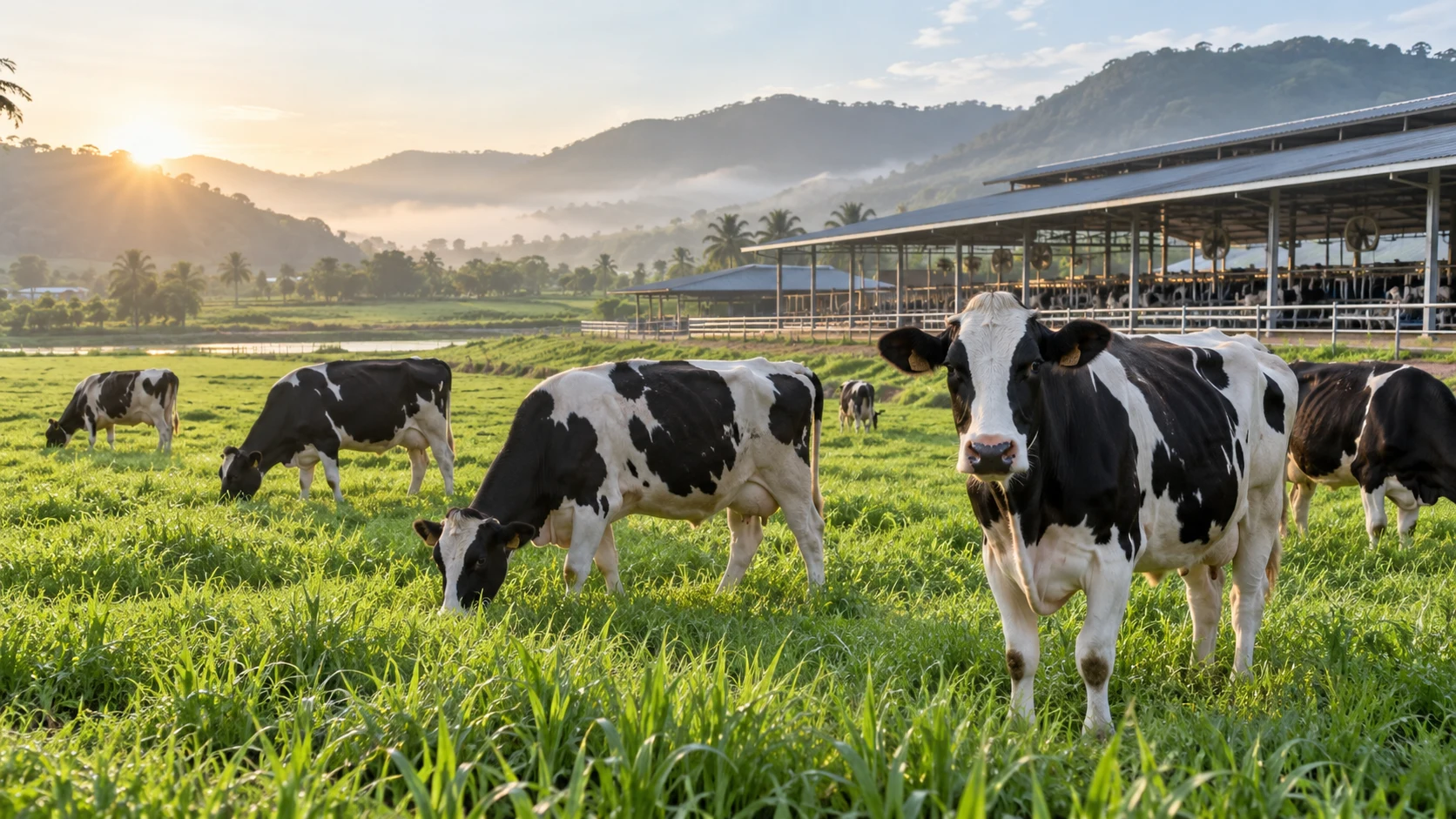
Vietnam's climate sets three challenges for the ration: heat makes animals eat less, the rainy and damp seasons make raw materials mould, and northern cold spells make piglets and chicks burn energy to keep warm. Review the ration, raw-material storage and drinking water before each season arrives, not after performance has dropped.
- In the heat, animals eat less. Each kg of feed must carry enough nutrients for the real intake.
- Rainy and damp months are testing months: grain moisture and mycotoxins rise in storage.
- North and south need different calendars. One fixed ration for the whole country all year wastes money.
- Drinking water is the most forgotten part of the hot-season ration.
Contents
When in the year does the ration need to change?
Three risk periods overlap and differ between north and south. The calendar below is a guide; weather shifts by a few weeks each year, so follow the local forecast.
How does heat affect the ration?
In the heat, pigs and poultry eat less to cut the heat produced by digestion. The problem is not an empty trough; it is fewer nutrients going in while requirements do not fall by the same amount.
In May 2026 Vietnam's Department of Livestock Production and Animal Health issued Official Letter 1677/CNTY-KHCNMT asking provinces to act on hot weather [1]. On nutrition it advises smaller, more frequent meals in the early morning, late afternoon or evening, avoiding midday feeding, and more protein-rich and green feed.
- Recalculate on real intake
Log daily intake from April. As intake falls, the nutritionist adjusts amino-acid and mineral density to the kilograms actually eaten.
- Cool, clean water at full flow
Check drinker flow rates and water temperature in sun-exposed pipes. Animals that drink less eat less.
- Keep feed fresh in the trough
Damp feed left in the trough on hot days spoils and moulds fast. Feed more often, less each time.
- Gut support
Heat stress affects the gut lining. Many mills add beneficial microorganisms and yeast to their hot-season programme as nutritional support.
Why are the rainy and damp months mould season?
High air humidity makes stored grain take up moisture again. Aspergillus grows fast once grain moisture passes about 14%, and toxin that has formed does not disappear in the pellet mill.
- Storage: pallets off the floor, bags off the walls, ventilate by day, close up during damp spells.
- Rotation: first in, first out; never hold finished feed past the shelf life the mill states.
- Testing: screen every incoming truck more often in the rainy months.
How to sample and read results is in our article on mycotoxins in animal feed.
Preparing a hot-season or rainy-season programme?
Send us the stage, main rations and region. We suggest the nutritional support that fits the season.
What matters in the ration during northern cold spells?
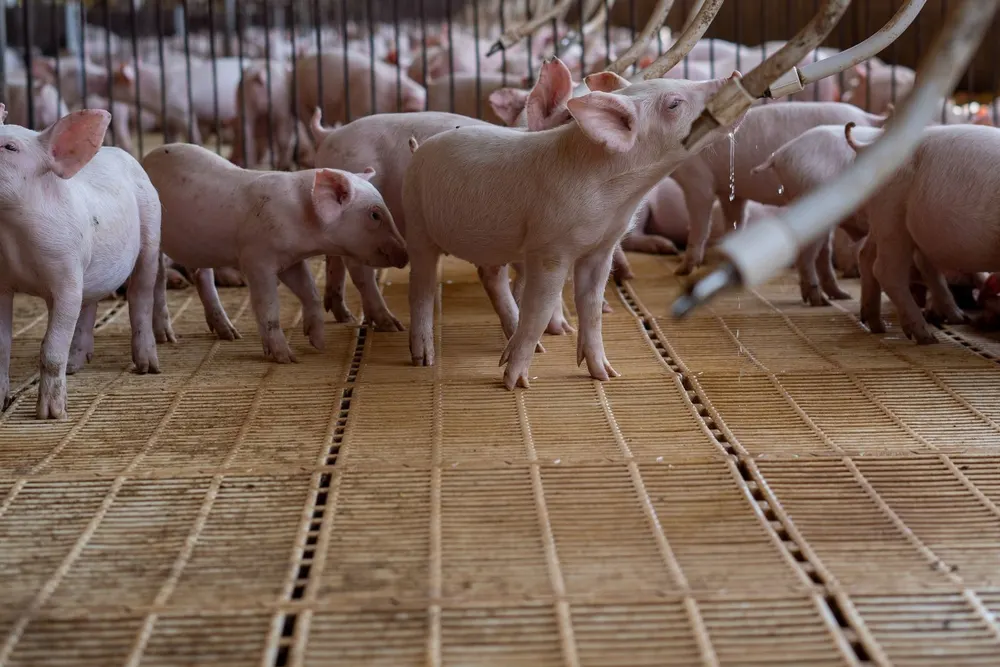
Weaned piglets and chicks under 21 days are hit hardest: they spend part of their energy intake keeping warm, and an immature gut is easily upset by sudden weather changes.
- Keep housing warm and draught-free first; a ration cannot make up for the wrong house temperature.
- Change rations gradually over 3–5 days, not on the same day as a cold front.
- Watch flock and litter uniformity: the cold widens the gap to the weaker animals quickly.
These are also the last two groups that could receive preventive antibiotics in feed before 2026 (piglets up to 25 kg, poultry 1–21 days, under Article 12 of Decree 13/2020). Cold spells are when an antibiotic-free programme is tested hardest.
What should you review before each season?
A short table for the technical team to use at the start of each season.
| Season | Main risk | Review |
|---|---|---|
| Hot season | Lower intake, more drinking, wet droppings | Nutrient density for real intake, water, feeding times |
| Rain, damp | Grain takes up moisture, mould, toxins | Storage, testing frequency, binder inclusion |
| Cold (north) | Piglets and chicks lose heat, digestive upsets | House temperature, gradual ration changes, gut support |
| Season change | Sudden weather swings | Weekly performance records to see problems early |
Our view
- Plan by season, not by incident. Hold a review before April, June and November each year.
- North and south are two programmes. The damp nồm season and cold spells do not happen in the south.
- Measure intake and water before concluding the ration is the problem.
- Judge gut support on your own farm's data, comparing the same season across two years or two parallel groups.
FAQ
Should protein be cut in hot weather?
The Department advises more protein-rich feed and less starch and fat in the hot season [1]. With compound feed, nutritionists usually work on digestible amino acids and real intake rather than raising or lowering crude protein.
Are electrolytes in the water needed?
Many farms use electrolytes during peak heat. Ask your veterinarian about dose and duration, and make sure they do not block the drinker lines.
How long can finished feed be stored in the rainy season?
Up to the shelf life on the mill's label, and less if the store can't control humidity. First in, first out is the minimum rule.
How does the Lào wind affect animals?
The hot, dry wind in central and north-central Vietnam, around May to July, raises house temperature fast and drops humidity. Water and feeding times matter most on those days.
Sources
- Báo Đại Đoàn Kết (31 May 2026), citing Official Letter 1677/CNTY-KHCNMT of the Department of Livestock Production and Animal Health on hot weather.
- QCVN 01-183:2016/BNNPTNT and QCVN 01-190:2020/BNNPTNT: aflatoxin limits.
- Decree 13/2020/ND-CP, Article 12 (2026 consolidated text): young-animal criteria.
Technical information, not a substitute for veterinary advice. Biofeed Ras products are feed additives, not veterinary drugs.