01 / Binding system
Activated clinoptilolite, a natural zeolite, combined with esterified yeast-cell-wall glucomannan. The brochure describes adsorption and ion-exchange mechanisms for selected toxins and ammonia.
 BIOFEED RASANIMAL NUTRITION
Mycotoxin management support
For QA teams and nutritionists dealing with variable grain quality and measured mycotoxin exposure. A mineral and yeast-derived binding system is combined with gut-support components, probiotics and enzymes for evaluation within your feed-quality programme.
A STARTING POINT FOR
Feed-mill QA, procurement and nutrition teams selecting a mycotoxin-management approach from ingredient tests and ration data.
Ask QA and procurement to bring ingredient-test results, storage conditions and acceptance limits. Review this formulation’s binding data and nutritional components against the risk you have actually measured.
Vietnam 2026 · plan your technical review ↗Activated clinoptilolite, a natural zeolite, combined with esterified yeast-cell-wall glucomannan. The brochure describes adsorption and ion-exchange mechanisms for selected toxins and ammonia.
MOS, β-1,3/1,6-glucans and colostrum. The poultry formulation explicitly excludes colostrum.
Saccharomyces cerevisiae; Lactobacillus acidophilus; Lactobacillus casei; Bacillus subtilis; Bacillus licheniformis; Enterococcus faecium (called Streptococcus faecium in the older brochures).
Digestive enzymes plus iron, copper, zinc and manganese in chelated / organically bound forms.
| Enzyme | Enzyme activity (U/kg of product) |
|---|---|
| Amylase | 10,500,000 |
| Protease | 1,000,000 |
| Cellulase | 480,000 |
| Lipase | 300,000 |
| Pectinase | 200,000 |
| Xylanase | 140,000 |
| β-glucanase | 140,000 |
| Lactase | 10,000 |
| Phytase | 0–70* |
These numbers describe enzyme activity in one kilogram of product. They are not an order quantity or a feeding dose. U = enzyme activity units; confirm the assay definitions and current guaranteed values with the supplier.
* Phytase is printed as “min. 0–70”. The source states that ruminant formulations contain no added phytase and incorporate extra cellulase. Confirm the assay units and current specification.
| Species / ration | High · kg/ton feed* | Medium · kg/ton feed* | Low · kg/ton feed* |
|---|---|---|---|
| Poultry | 1–2 | 0.7–1.5 | 0.5–1 |
| Swine | 1–2 | 0.4–0.8 | 0.2–0.5 |
| Dairy: TMR | 1–2 | 0.7–1 | 0.5 |
High, medium and low contamination categories are not given analytical thresholds in this brochure. It also lists 10–15 g/head/day for dairy. Confirm a recommendation from actual feed analysis. A binder does not replace ingredient acceptance limits, proper storage or compliant feed disposal.
* The original brochure uses “ton of feed” without defining its mass or the feed moisture basis. Confirm these with the supplier before converting rates or applying them to a ration.
| Parameter | Information in the supplied document |
|---|---|
| Clinoptilolite surface area | 45–60 m²/g |
| Pore volume requires clarification | The brochure prints 0.34 with conflicting units (cm³/g and cm³/cm³). Request the current mineral specification. |
| Cation exchange capacity | 150 meq/100 g |
| Supplier-described characteristics | Activated mineral; broad-spectrum binding, moisture control and anti-caking characteristics. Nutrient selectivity and irreversible binding are brochure claims requiring current supporting data. |
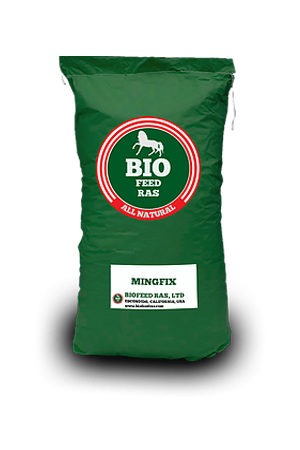
| Packaging | 25 kg powder bag with inner liner. |
| Shelf life in brochure | 18 months in sealed original packaging. |
| Storage | Store in a cool, dry place, protected from direct sunlight and heat. Keep the inner liner tightly closed after opening. |
The brochure provides laboratory binding tables, including a 2003 aflatoxin comparison attributed to Dr Winston M. Hagler Jr., North Carolina State University. These are historical in-vitro observations. The multi-toxin table does not disclose a complete protocol or sample size. Binding percentages cannot be treated as on-farm efficacy, safe feed limits or current competitive superiority.
| Mycotoxin | Reported binding | Test concentration |
|---|---|---|
| Aflatoxin B1 | 100% | 3.5 ppm |
| Fumonisin B1 | 100% | 2.4 ppm |
| Fumonisin B2 | 88% | 2.4 ppm |
| Citrinin | 99% | 2.5 ppm |
| DON | 80% | 7 ppm |
| T-2 | 75% | 2.5 ppm |
| Zearalenone | 65% | 4.5 ppm |
| Ochratoxin | 80% | 0.125 ppm |
As printed in the brochure; MTB-100 is also identified there as MYCOSORB. This historical comparison does not establish present-day comparative performance.
| Test condition | MINGFIX | MTB-100 |
|---|---|---|
| Overnight · as-is pH | 87.0% | 3.8% |
| Overnight · pH 7 | 89.4% | 38.0% |
| Mixed 2 hours · as-is pH | 78.4% | 34.0% |
Request updated independent binding/desorption tests at relevant pH, ingredient interaction data, full mineral specifications, contaminant limits, viable counts and a feed-analysis-based inclusion plan.
Original manufacturer document in English. Page numbers refer to PDF order.
THE NEXT STEP
Share your ration, species and objectives so the next step is specific.